Best Clear Greenhouse Plastic for High-Light Crops
April 06, 2026
Quick Answer
For high-light crops, prioritize maximum light transmission (clear film), then add protection features that keep that light usable: UV stabilization, optional IR/AC additives (to reduce heat loss and condensation), and the right mil thickness for your wind/snow zone.
Clear film is the best starting point for high-light crops because:
Highest light transmission of any greenhouse film type
Best for cool seasons and cloudy regions where every bit of PAR matters
Heat is managed with ventilation and shade strategies, not by reducing light
What high‑light crops need from greenhouse plastic
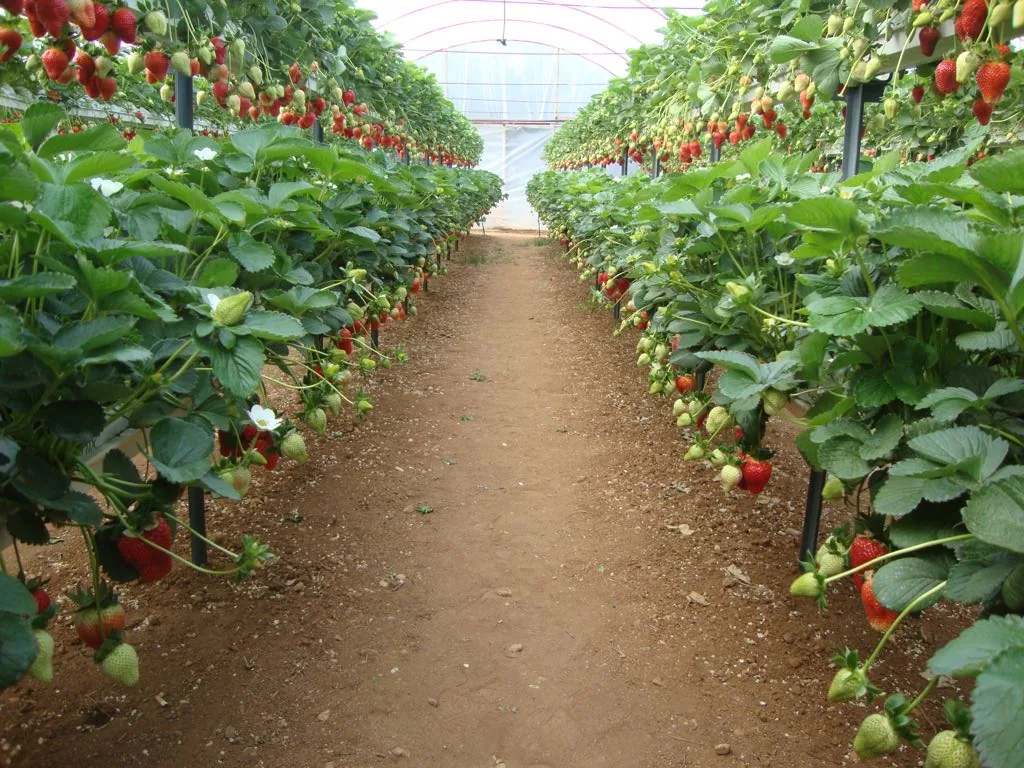
High‑light fruiting crops (like strawberries) benefit from high transmission when heat is managed.
"High‑light" crops are the ones that reward you when you keep PAR high: fruiting crops, vigorous berries, many herbs, and dense canopies that shade themselves quickly. In these houses, the goal is simple: lose as little sunlight as possible at the cover—then manage heat and humidity with ventilation and good hardware.
Clear greenhouse plastic is usually the best starting point because it offers the highest transmission. If you're in a hot climate, you don't "fix" heat with a low‑transmission cover—you fix it with venting, shade strategies, and irrigation timing, so you don't starve the crop for light.
Need Help Choosing the Right Clear Film?
Tell us your greenhouse size, your snow/wind exposure, and what you're growing—and we'll recommend the right thickness and additive package.
Clear vs diffused: when clear wins (and when it doesn't)
Clear vs diffused film comparison
Goal
Clear film
Diffused film
Maximum total light (PAR)
Best choice — highest transmission
Usually lower total transmission
Reducing hotspots / more even canopy
Can create hotspots on very sunny days
Often better — spreads light
High‑light crop in cool/shoulder seasons
Best choice
May reduce light when you need it most
Clear cover + good ventilation helps keep PAR high without cooking the canopy.
Rule of thumb: If your limiting factor is light (winter, cloudy regions, dense canopy), pick clear. If your limiting factor is heat stress and sunscald (very intense summer sun), you can still use clear—just plan your heat management. Many growers prefer clear plus a seasonal shade strategy rather than permanently lowering transmission.
If your main problem is hotspot reduction, more even canopy light, or sunscald under very intense summer sun, diffused film may be the better fit.
Specs that matter: UV, IR/AC, anti-drip, thickness
UV stabilization: Non‑negotiable for lifespan. Choose film rated for greenhouse use.
IR additive: Helps retain heat at night (useful for shoulder seasons and energy costs).
Anti‑condensate / anti‑drip (AC): Reduces dripping and keeps the cover clearer by managing water film. Less drip = healthier canopy and better usable light.
Thickness (mil): A durability and risk decision. Thicker film handles abuse better, but the right choice depends on your structure and weather.
Practical Recommendations by Use Case
High-light crops in cooler climates
Clear film + UV + optional IR/AC. Your priority is transmission; IR/AC helps you keep that light productive by reducing condensation and nighttime heat loss.
High-light crops in hot climates
Clear film + UV + AC. Plan for ventilation, roll-up sides, or seasonal shade. Don't permanently trade away light unless you've proven heat stress is the limiting factor.
Commercial / high-value production
Bias toward durability (often thicker) and a full additive package if uptime matters. If replacement labor, crop timing, or downtime would be costly, it usually makes sense to choose the more durable option up front. The most expensive film is the one you replace mid-season.
Ready to Choose the Right Clear Film?
Shop clear greenhouse plastic by width and thickness, or request a quote if you need help with sizing or a larger order.
Clear film increases solar gain, but heat is usually managed with ventilation and shade strategies. If you're consistently heat-limited, consider seasonal shading before switching to a permanently lower-transmission cover.
Does anti-drip/AC affect light?
AC additives help manage condensation so droplets don't scatter light unpredictably and drip onto the crop. In practice, it often improves usable light and crop health.
Is thicker film always better?
Thicker film is more forgiving, but the "best" thickness is the one that matches your structure, your weather, and your tolerance for downtime and replacement labor.
Is clear always better than diffused for high-light crops?
Not always. Clear is usually the better choice when light transmission is the priority, especially in cooler seasons, cloudy regions, or dense canopies. Diffused film may be the better fit when your bigger problem is hotspot reduction, more even canopy light, or sunscald under very intense summer sun.